

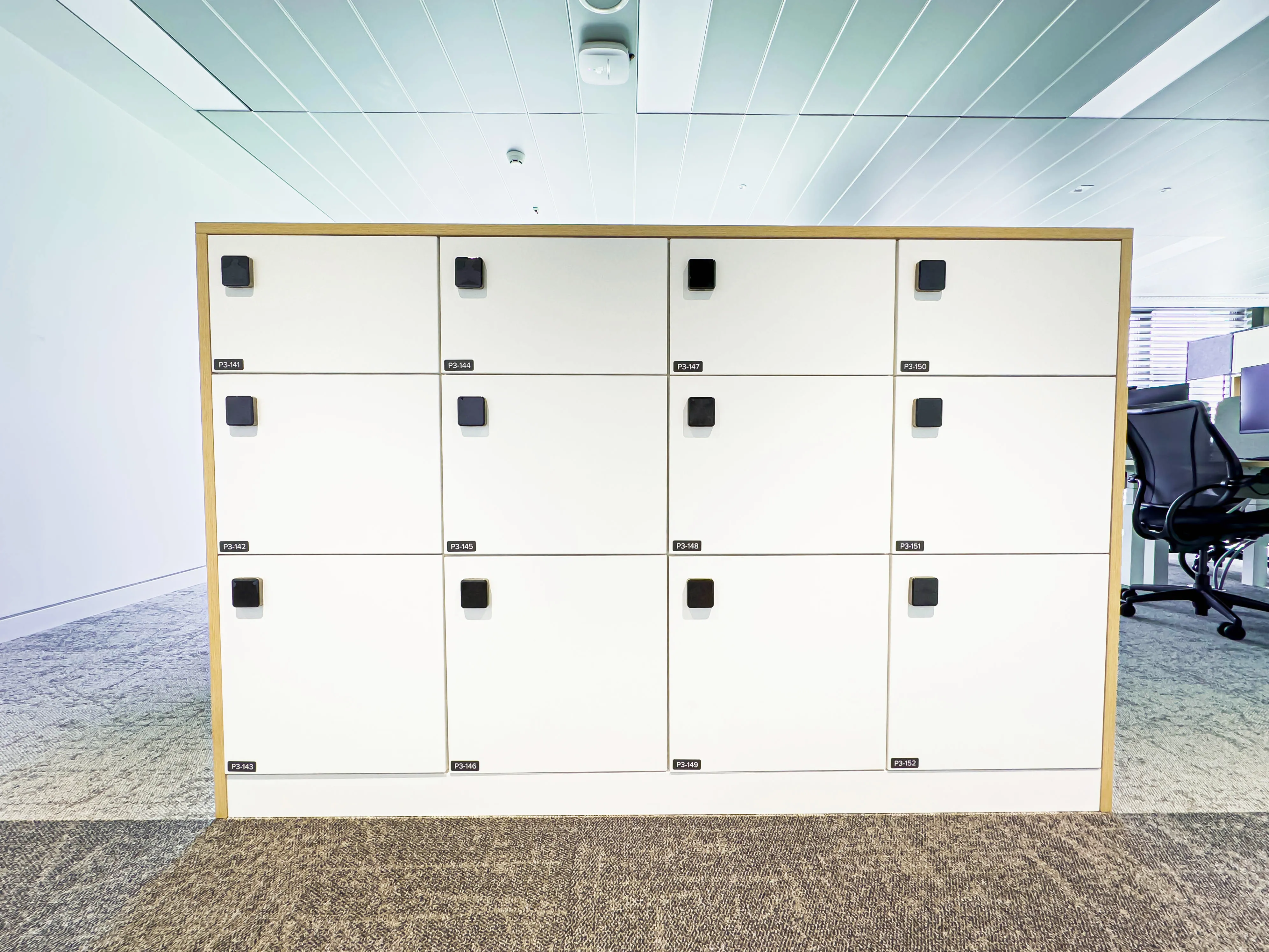
In 2026, selecting the right locker for your location is about more than choosing between metal or laminate. Today’s lockers are part of broader workplace and facility design strategies - combining durability, technology and user experience. Whether you’re fitting out an office, campus, gym or residential building, the right system should match your space’s flow, access method and aesthetic, while being adaptable for the future.
Is a mechanical padlock the best fit, or do you want to look into the smart locker systemsbut don’t know where to start?
Here is a quick summary of everything you need to take into consideration when choosing a locker.
Materials
Lockers are usually made out of one of these materials: **wood, metal, laminate (HPL)**or plastic. Each of the materials comes with its pros and cons, and depending on your location (e.g. aquatic or office space), one can come out on top as the perfect fit.
Material Wood Metal Laminate (HPL) Plastic Sturdiness Medium High High High Maintenance Difficult Difficult Easy Easy Cost High Low High Low Possible damage Molding, water damage Rusting in humid condition, denting Delamination, chips easily Colour fading from direct sun exposure Resistance No wear and tear No wear and tear No wear and tear, no water damage No wear and tear, no water damage, resistant to corrosion and molding Aesthetic Elegant design Simple and sturdy Elegant design Functional design Suitable locations Office spaces Schools, gyms Aquatic locations, gyms, office spaces Aquatic locations, gyms, schools
It’s all about balancing out the pros and cons of each material and choosing the best one for you. Feel free to reach out to your locker manufacturer and ask any additional questions you might have.
Locks
The lock market has evolved****immensely over the years, and it’s come to a point where it can be complicated and stress-inducing to choose the right lock for your locker. Here are some of the different types of locks you can choose from, as well as their features.
Mechanical locks
Mechanical locks are the simplest type of locks to use and have no technology attached to them. While they are sturdy and can be installed anywhere, the level of security is relatively low.
Another con is that your users might not like using a physical key or carrying coins when they’re at your location, especially when today’s lock technology is user centric, with touchless opens and easy access.
Type of Lock Padlock Combination Lock Coin Deposit/Return How it works Key open Code Cash exchange Durability Medium High Medium Security Low Medium Low
Mechanical locks aredifficult to manage,****with misplaced keys, forgotten combinations or coins that always remain in slots, making it impossible to use the locker.
However, if you’re on a tight budgetor your end-users are elderly who can’t handle technology, looking into mechanical locks might be the option for you.
Electronic locks
There are various types of electronic locks, and just as with mechanical locks, they differ in how they open.
The three main ways electronic locks can work are RFID, pincode and app-open.
At first, electronic locks might seem difficult to understand. However, their installation and how-to-use are very simple. One thing these locks have in common is that they need power(batteries) to operate.
RFID and pincode are, at the moment, the most widespread out of the three types. RFID locks open by card or bracelet, while pincode uses a PIN on the lock keypad.
App-open electronic locks are the most self-serveout of three, allowing users to directly open their lockers through the appthey download on their phone.
Type of Lock RFID Pincode Yellowbox Wireless Lock How it works Card open PIN open App/Touchscreen/RFID Card/Company App Durability High High High Security High High High Management Capabilities ❌ ❌ ✅ Automated User Onboarding ❌ ❌ ✅ 24/7 Support ❌ ❌ ✅
While they are all more secure and much easier to manage than mechanical locks, some management or security issues can come up.
Managing thousands of RFID cards is verytime consuming, and no lock is entirely theft-proof.
Be sure to ask your locker manufacturer any additional questions so that you can make the best choice for your location.
Smart locker systems
Smart locker systems are a new, emerging thing on the market, and can sometimes seem confusing.
Simply put, smart locker systems are smart electronic locks that come with software that can track and collect applicable data, among other uses.
Things such as real-time visibility over who uses your lockers, support system, managing banks of lockers with a master key and generating reports is essential, both to already smart spaces and other locations where locker management is the priority.
The smart locker systems are still the most expensive option, so make sure to evaluate your budget before looking into one of these systems. These systems typically have a larger upfront cost, saving on administration costs in the long run.
With a smart locker system, you can always know how, when and in what frequency the lockers are used.
Smart Locker System Traditional smart locker systems Yellowbox smart locker system Access Methods RFID/Pincode App/RFID/Touchscreen/Company App Automated Onboarding and Comms ❌ ✅ 24/7 Support ❌ ✅ Consistency of Feature Updates Never (Onsite servers) Monthly (Cloud Based) Installation process Technical Setup with Onsite Servers Automated Setup Lock options Hardwired Hardwired and Wireless
The Yellowbox is both the electronic lock and a smart locker system, and fully cloud based (thus severely reducing security risks).
It also has flexible access methods, such as the standard RFID swipe card integration, the highest rated locker access app on the market, intuitive touchscreen for PIN code access and integrations with leading Workplace Apps.
Yellowbox prides itself on saving time for admin and creating an intuitive user experience, from automating onboarding, creating a seamless self-serve booking process and prioritising both users and management, with 24/7 support.
Multiple lock options (hardwired and wireless) provide flexibility around where lockers can be stationed, both near power, and freestanding.
These are some of the things to think about when choosing the right locker for your location. While this article isn’t a replacement for in-depth research, it’s sure to give you the best head start with everything you need to consider when starting to look into purchasing lockers.